
A follow-up system in a CRM is a small set of rules that make sure every lead gets a fast first contact and a persistent, polite series of attempts until a human decision is made. It needs defined stages, one owner per record, a response-time rule, sequences that stop the moment a person replies, clear limits on what is automated, and a weekly pipeline review that reads the numbers rather than the anecdotes.
What the system is for
Most service businesses lose more revenue after the lead arrives than before. The inquiry comes in. Someone calls once, gets voicemail, and moves on to the next job. The estimate goes out and nobody follows up. None of this is a marketing problem. It is the absence of a system that holds the follow-up so people do not have to.
A CRM follow-up system does one thing. It makes sure every lead and every open quote gets the next action, on time, by a named person, until the record reaches a real end state: won, lost, or not now with a date. It does not sell. It makes sure selling happens.
Stages, ownership and the response-time rule
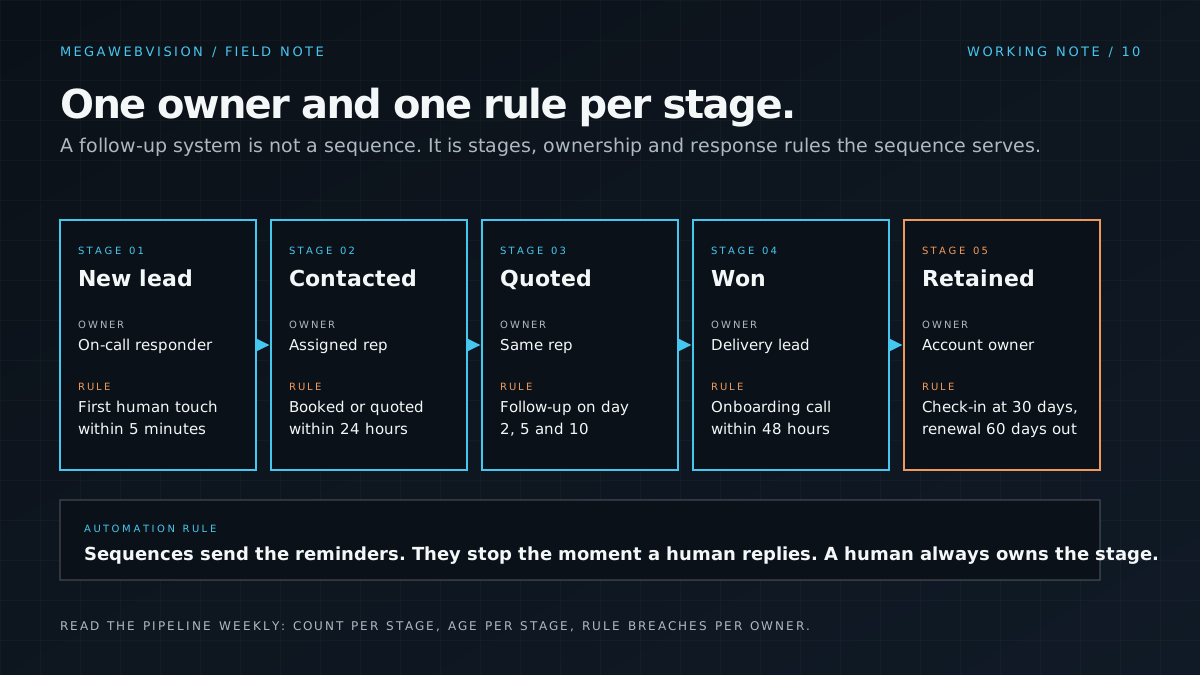
Start with stages that describe what actually happens, in the words the team uses. For a home services company that is usually New, Contacted, Estimate Booked, Estimate Sent, Won, Lost and Nurture. For a professional services firm it might be New, Discovery Held, Proposal Sent, Verbal Yes and Signed. If a stage does not change what the next action is, delete it.
Every record has exactly one owner from the moment it is created. Assignment can be by territory, by service line or by round robin, but it is never a shared queue.
The response-time rule is written down and enforced by the system. Five minutes to first human contact during coverage hours. An automated acknowledgement inside the first minute at all hours. An escalation to a manager when the record sits untouched past the limit. The rule is a capacity commitment, so coverage hours have to be staffed to match it.
Sequences that stop when a human replies
A sequence is a scheduled series of touches that runs when the owner cannot reach the lead live. A useful one for a new lead is a call attempt and a text in the first five minutes, a second call and an email the same day, then attempts spaced out across the next several days, each one short and specific to what the person asked about.
The most important property of a sequence is that it stops. The moment the lead replies by any channel, or the owner logs a conversation, the automation halts and the record moves to the next stage. A sequence that keeps sending after a human has replied does damage in one message that took ten to build.
Build a second sequence for sent estimates. Confirm receipt the same day. Ask for questions two days later. Offer a short call to walk through it. Then a check-in before the quote expires. Estimate follow-up is where the largest sums sit untouched in most service businesses.
Build a third for not now. A lead that said next season gets a date, goes to Nurture, and resurfaces as a task for the owner on that date. Nothing in Nurture is forgotten, because the system holds the date, not the person.
What to automate and what not to
Automate anything that is a reminder, a confirmation, a schedule or a status change. Acknowledgement messages. Task creation when a stage changes. Estimate receipt confirmations. Appointment reminders. Review requests after a completed job.
Do not automate the first real conversation, the negotiation, the response to a complaint, or the message after a lost deal. Those are where trust is built or broken. Do not automate any message you would be embarrassed to have sent twice.
Do not automate stage changes based on guesses. A record moves to Estimate Sent because an estimate was sent, and the system can see that. It does not move to Won because the customer sounded positive.
How to build it
Build it in this order. Each step depends on the one before it.
- Get every lead source into the CRM automatically. Web forms, call tracking, chat, marketplaces, email. Test each with a real inquiry and confirm the record appears with the source labeled.
- Define the stages and write a one-line rule for entering each one.
- Set ownership rules so every new record is assigned on creation and every reassignment is logged.
- Write the response-time rule, the acknowledgement message and the escalation. Configure the alerts. Confirm the coverage rota can meet the rule.
- Write the three sequences: new lead, estimate sent, not now. Keep each message under 60 words. Set the stop conditions first, then the schedule.
- Push a test lead through every path. Read the timestamps. Fix anything that did not fire, then do it again.
- Train the team on one behavior: log the conversation. Everything else in the system depends on that one habit.
Read the pipeline weekly
Once a week, the owner or the sales lead reads the pipeline from the numbers. Leads created, by source. Median time to first response. Records past their stage limit. Estimates sent, and estimates over ten days old without a reply. Won, lost, and why lost. Nurture records due this month.
The review is a check on whether the system is doing what it was built to do. When time to first response drifts, it is coverage. When estimates pile up, it is the follow-up sequence or the pricing. When lost reasons cluster, it is a sales conversation problem or a targeting problem. Each has a different fix, and the pipeline tells you which one you have.
Questions leaders ask
Which CRM should a service business use?
The one the team will actually log into. Most modern CRMs can do stages, ownership, alerts and sequences. Choose for adoption, mobile use in the field and native call and text logging over feature depth. A simpler tool that records every conversation beats a powerful one that records half of them.
How many follow-up attempts are too many?
Judge it by tone and spacing, not count. Several attempts over one to two weeks, each short, each referring to what the person asked for, is normal in service businesses and rarely resented. What is resented is a message that ignores a reply, or a sequence that keeps going after the person said no.
Who should own the pipeline review?
The person accountable for revenue that month, which in a mid-market service business is usually the owner or the general manager, with the sales lead present. Delegating the review to the CRM administrator turns it into a data hygiene exercise. The review is a commercial decision, and it belongs with whoever makes those.