
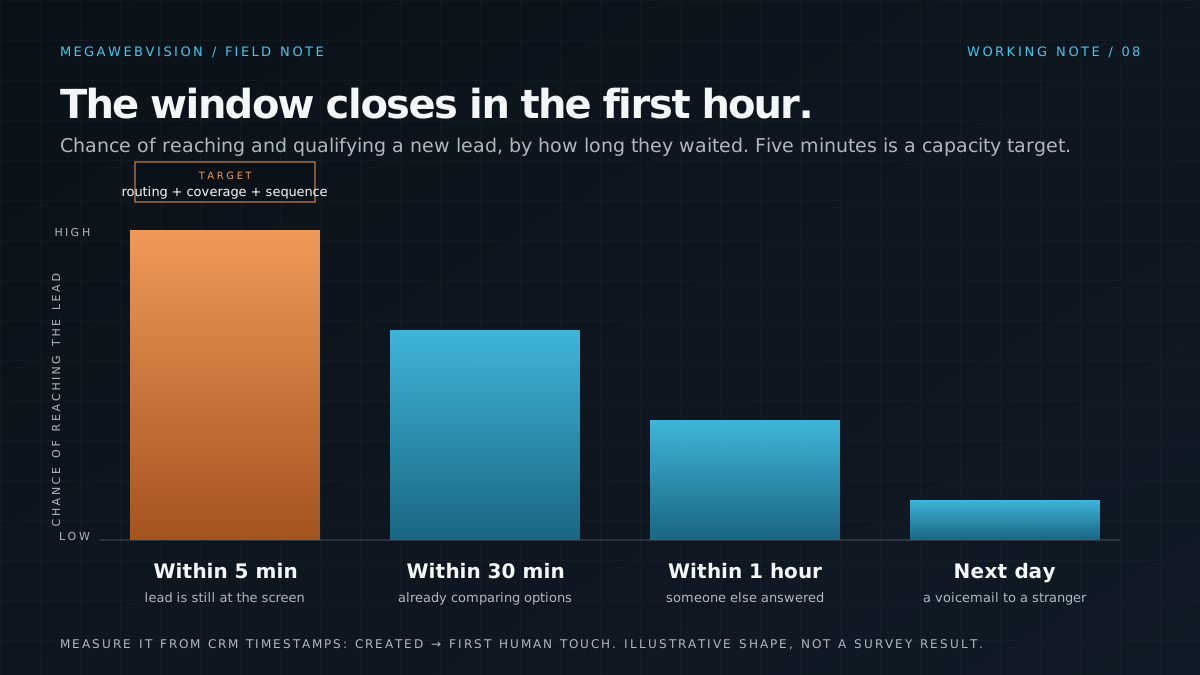
Answering a new lead within five minutes changes who you are competing against. The prospect is still on your site, still holding the phone, still comparing. Most businesses miss the window not because staff do not care but because nobody is assigned, nothing is measured and the CRM does not route. Response time is a capacity problem. Fix it with routing, coverage and follow-up sequences, and measure it from CRM timestamps.
Why the first five minutes are different
A new inbound lead is a person in the middle of a decision. They filled in a form, sent a message or called, and then they kept going. A homeowner comparing three roofing quotes is still on the second website. A plant manager looking for a contract machining shop has four tabs open. If you reach them while the decision is still live, you are part of it. If you reach them tomorrow, you are interrupting a decision that has already moved on.
The Harvard Business Review lead response study by Oldroyd, McElheran and Elkington made this measurable. Companies that contacted a web lead within an hour were about seven times more likely to qualify it than companies that waited even one more hour. The average response time among the firms studied was 42 hours. A meaningful share never responded at all. That is the baseline most service businesses are quietly living with.
Five minutes is a stricter target than one hour. It is the point at which the prospect is usually still where they were when they reached out, and it is achievable for most service businesses during working hours.
Response time is a capacity problem
Owners tend to treat slow response as an attitude problem. Someone was not paying attention. That framing is wrong more often than it is right. The people answering leads are usually also estimating, dispatching, invoicing or on site. Nobody decided to ignore the lead. The business simply did not have anyone whose job was to answer it inside five minutes.
Look at where leads land. A form goes to a shared inbox that three people check when they can. A phone rings at a front desk that is empty at lunch. Each path has a gap, and the gap is structural. Motivation cannot fill a structural gap for more than a week.
Once you accept it is capacity, the fix becomes ordinary operations work. Who owns it. When are they covered. What happens when they are not there. What the system does on its own.
Measure it from CRM timestamps
Do not ask the team how fast they respond. Ask the CRM. Every serious CRM records when a contact was created and when the first outbound activity was logged, whether that was a call, a text or an email. The difference is your time to first response. Pull it for the last 90 days and look at the median, not the average.
Then split it. By source: paid search, referrals, website forms, phone. By hour of day and day of week. By person. The pattern is almost always uneven. Weekday mornings are fine. Friday afternoons, evenings and weekends are where the window closes.
If the CRM cannot produce this number, that is a finding in itself. It means leads are entering through paths the system does not see, or activities are not being logged. Fix the logging before you fix anything else, or you will be managing blind.
A method to reach five minutes
This is the sequence that works for a service business with a small team. Do it in order.
- Put every lead source into the CRM automatically. Forms, calls, chats, marketplace inquiries. If a lead can arrive without creating a record, it will.
- Assign a single owner per lead the moment it is created. Round robin is fine. A shared queue is not. A queue means everyone assumes someone else has it.
- Set a response-time rule and make it visible. Five minutes during coverage hours. Alert the owner immediately. Alert the manager at ten minutes if nothing has been logged.
- Build coverage. Map the hours leads arrive against the hours someone is available to answer. Close the gaps with a rotation, an answering service that books directly into your calendar, or a second person during peak windows.
- Send an automated first touch in the first minute. A text and an email that confirm receipt, name the person who will call, and offer a booking link. This buys time without lying about it.
- Run a follow-up sequence that stops the moment a human connects. Several attempts over several days across call, text and email. The sequence exists for the leads you could not reach live, not as a replacement for reaching them.
- Review the median weekly. Keep the by-source and by-hour split on the same page. When a number slips, the cause is usually a coverage gap, not a person.
What changes when you get there
The first thing that changes is the conversation. When you call inside five minutes, the prospect remembers the form. The call is short and specific. Late calls start with the prospect trying to remember who you are.
The second is your view of marketing. Many businesses conclude that paid search does not work because the leads did not convert. Often the leads were fine. They were answered late. Fixing response time before spending more on demand is the cheapest test of whether demand was ever the problem.
The third is that sales capacity becomes a number you can plan. If you know how many leads arrive per hour and how long a first call takes, you know how many people you need on coverage. That is a staffing decision.
Questions leaders ask
Does the five-minute rule apply outside business hours?
It applies whenever leads arrive, which for consumer services is often evenings and weekends. If you cannot staff those hours, use an automated first touch that confirms receipt and books a time, and put the lead first in the queue the next morning. Make the coverage gap an explicit decision, not an accident.
What if our sales cycle is long and leads are not in a hurry?
The speed still matters. Even in a long cycle, the first response sets who the prospect trusts and who gets the second conversation. A fast, useful first reply on a complex manufacturing inquiry earns the site visit. A slow reply hands it to whoever answered first, regardless of who is better.
Can an automated text count as the first response?
It counts as acknowledgement, not response. Measure both. Time to acknowledgement should be under a minute and can be automated. Time to first human contact is the number that predicts qualification, and it needs a person. Treat the automated message as a promise, then keep it.