
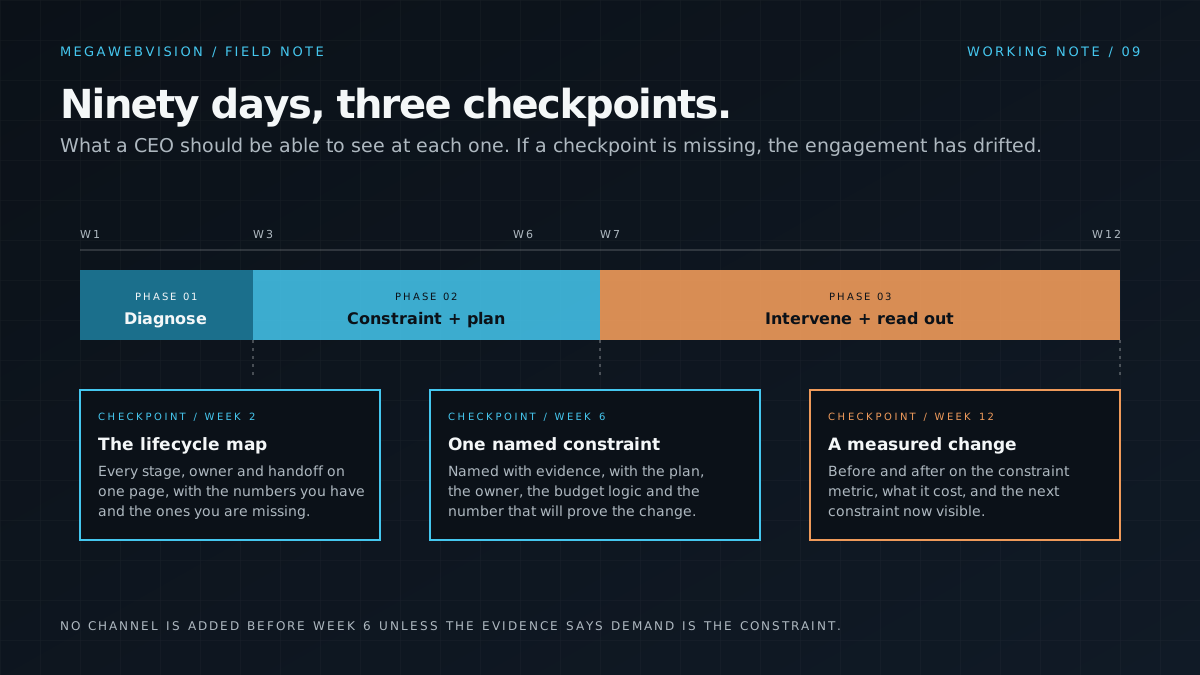
In the first 90 days a fractional CMO should diagnose, choose one constraint, and move it. Weeks one and two produce a diagnosis from the numbers the business already has. Weeks three to six name the single stage limiting revenue and lay out a plan with a target and a date. Weeks seven to twelve run the intervention and end with a readout the CEO can act on. If there is no readout, there was no work.
Ninety days is a diagnosis and one proof
A fractional CMO is bought for judgment and ownership, not for hours. The failure mode is a senior person who produces a 40-page strategy, a brand refresh and a new agency shortlist, and leaves the CEO no better at knowing what limits revenue. Ninety days should end with one thing proved: this stage was the constraint, we moved it, and here is what it did to the number.
That framing forces discipline. It rules out starting with the website or the brand. It rules out a campaign nobody has evidence for. Those may come later. They come after the evidence, not before it.
Weeks 1 to 2: the diagnosis
The first two weeks are spent inside the business, not in a slide tool. The CMO pulls qualified leads per month by source, lead to opportunity rate, close rate, median time to first response and repeat or renewal rate for the last two quarters. They sit in on sales calls. They read the last 50 lost deals. They check what the CRM actually records against what people say it records.
They also map capacity. How many leads can the current team answer inside five minutes. How many estimates can be delivered per week. How many jobs can be installed or how many engagements staffed. Growth stalls where capacity breaks, and the diagnosis has to say where that break is.
The output is a short written diagnosis. One page. The five numbers, the capacity map, and the three things most likely limiting revenue, ranked, with the evidence for each.
Weeks 3 to 6: one constraint and a plan
By the end of week three the CMO names one constraint. Not three. One. A regional HVAC company might have plenty of calls and a booking rate that collapses after hours. A professional services firm might close well but only see a handful of real inquiries a month. An ecommerce brand might acquire fine and lose most first-time buyers before the second order.
The plan that follows is specific to that constraint. It names the intervention, the owner inside the business, the metric, the baseline, the target and the date. It lists what will not be done in the same window, so effort does not leak. It defines what would prove the diagnosis wrong.
Weeks four to six are setup. Routing rules built. Sequences written. Tracking confirmed end to end with a test lead. The sales team briefed on the one behavior that changes. If a vendor or agency is needed, the CMO scopes and manages them against the same target.
Weeks 7 to 12: intervention and readout
The intervention runs. The CMO watches the metric weekly and adjusts execution, but does not swap the target. Halfway through the window the numbers are usually noisy. That is normal. The job is to hold the line long enough for the signal to show, and to fix execution problems as they surface rather than redesign the plan.
Week twelve is the readout. Baseline, target, result. What moved and what did not. Whether the constraint was correctly identified. What the next constraint appears to be. A recommendation on what to activate next, and an honest statement of what the evidence does not yet support.
If the intervention did not work, the readout says so and says why. A CEO learns more from a clear negative result than from a positive one that cannot be explained.
What a CEO should see at each checkpoint
Use this as the acceptance test. If a checkpoint passes without the artifact, ask for it.
- End of week 2: a one-page diagnosis with the five numbers, the capacity map and ranked candidate constraints. Not a deck.
- End of week 3: one named constraint and a written plan with owner, metric, baseline, target and date.
- End of week 6: the intervention built and tested. A test lead has been pushed through the whole path and the CMO can show the timestamps.
- Weeks 7 to 11: a weekly one-line status. Metric this week against target, one blocker, and one decision needed from the CEO if there is one.
- End of week 12: a readout with the result, a verdict on the diagnosis, the next constraint and a recommendation. Then a decision on whether the engagement continues and on what.
What a good fractional CMO refuses
They refuse to start with rebranding, a new website or a new agency before the diagnosis. They refuse to run three interventions in parallel because the CEO is impatient. They refuse to report activity when the CEO asked for results, and they refuse to claim a number the CRM cannot show.
They also refuse to own everything. A fractional leader owns the commercial decision and the operating cadence. They do not become the marketing department. Where the business needs execution capacity, they specify it, source it and manage it to the target. That is what keeps the role senior and the cost proportionate.
Questions leaders ask
How many hours a week should a fractional CMO be present?
Enough to own the decision and the cadence, which is usually a day or two a week in the first month and less once the intervention is running. Judge the role by checkpoints delivered, not hours logged. A fractional leader who needs 40 hours a week is a full-time hire with a different title.
What if the diagnosis says marketing is not the problem?
That is a valuable result. If the constraint is sales follow-up, estimating capacity or retention, the CMO should say so and plan the intervention there, because those stages decide whether marketing spend converts. A CMO who only proposes marketing fixes decided the answer before looking.
Should the CMO manage our existing agency?
Yes, against the same target. The agency gets a clear constraint, a metric and a date, and the CMO reviews their work weekly. Most agency relationships underperform because nobody on the client side owns the decision. That ownership is the point of the role, not replacing the agency.